
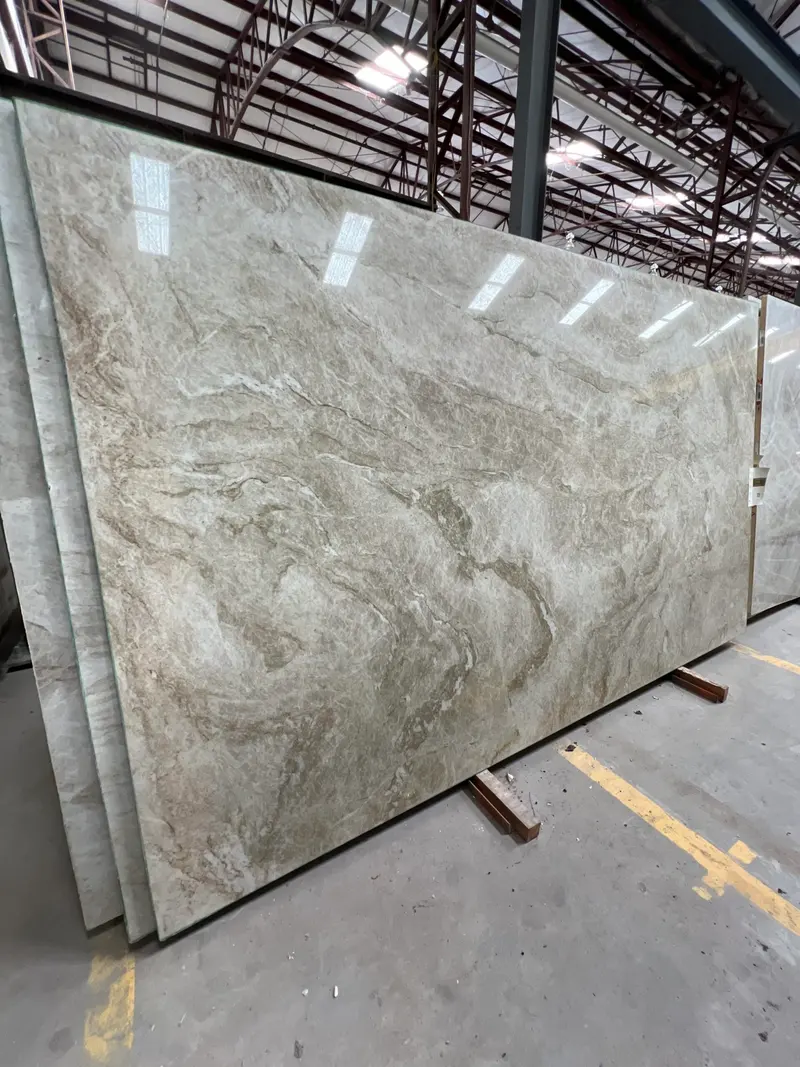
The best countertops for a kitchen remodel in Kenner depend on how you cook. Quartz is low maintenance, but it needs trivets, because heat can damage its resin. Quartzite is a natural stone that will not etch from kitchen acids. Granite is natural and varied, and porous slabs benefit from a sealer. Marble is the classic look, but acids like lemon juice and vinegar etch it. Weigh those trade-offs against the way your kitchen is actually used, then choose the slab in person.
If your countertop is part of a larger kitchen remodeling project in Kenner, this guide covers what each material is, how it handles heat and acids, and what that means for care. Where a fact comes from a stone industry source, it is linked.
Quartz: engineered stone
Quartz countertops are manufactured, not quarried as a single slab. According to the stone supplier MSI, they are made by mixing around 90–94% crushed natural quartz with resin binders and colors. Quartz countertops are known for durability and easy maintenance.
The resin is also its main limit. MSI notes that extended or excessive heat can soften, discolor or even scorch the resin, and recommends always using trivets or heat-resistant mats under hot cookware and appliances. If you cook a lot and tend to set pans straight down, plan for trivets by the stove.
Granite: natural stone formed from magma
Granite is a natural stone. As the Natural Stone Institute puts it, granite is a whole separate category of rocks that form from liquid magma, and it comes in a wide range of colors and patterns. Every slab is different, which is part of its appeal.
Like many natural stones, granite can be porous to some degree. The Natural Stone Institute recommends impregnating sealers for porous stones, because a sealer slows the rate of absorption and gives you time to clean a spill before it becomes a stain. Ask about the specific slab you are considering, because porosity varies from stone to stone.
Marble: beautiful, and sensitive to acids
Marble is the classic look, with soft backgrounds and dramatic veining. What sets it apart in a kitchen is how it reacts to acids. The Natural Stone Institute explains that acids can affect stones that contain calcite or dolomite, a group that includes marble, limestone, travertine and onyx. The result is etching, which looks like a dull area on the surface of the stone.
Lemon juice, vinegar, wine and tomato sauce are everyday kitchen acids. That does not rule marble out. It means choosing it with open eyes. The Natural Stone Institute notes that etching is less of a concern for people who do not aspire to perfection, and that a honed finish often makes etch marks less visible than a polished one. If you love marble but cook with a lot of acidic ingredients, a bathroom vanity or a bar, where acids are less common, can be a good place for it.
Quartzite: natural stone made of quartz
Quartzite is easy to confuse with quartz, but it is a natural stone. According to the Natural Stone Institute, quartzite is a metamorphic rock made almost entirely of the mineral quartz, and it will not etch from normal kitchen acids like lemon juice or vinegar. For homeowners who love the look of marble but worry about etching, that makes it worth a close look.
There is a catch: the Natural Stone Institute warns that quartzite is commonly mislabeled, and that a stone sold as a "soft quartzite" is most likely marble. Its suggested test is simple. Put lemon juice or vinegar on a sample, let it sit for about 15 minutes, wipe it off and see whether the surface has changed. If it etches, it is not quartzite.
Side by side
In short:
- Quartz: engineered and low maintenance. Use trivets, because heat can damage the resin.
- Granite: natural, and every slab is different. Ask whether your slab is porous and whether it should be sealed.
- Marble: natural, classic and sensitive to acids, which etch it. A honed finish hides etching better.
- Quartzite: natural, made of quartz, and does not etch from kitchen acids. Test it, because it is often mislabeled.
Thickness, edges and where the stone goes
The material is only one decision. In the kitchens on our project pages you will see 2cm quartz countertops, 3cm marble and quartz islands, full-height stone backsplashes and waterfall edges. On one island, a 3-inch mitered edge was fabricated to give the countertop the look of a much thicker slab. Each choice changes the look and the price.
Think about where each surface will be used, too. A kitchen island, a bathroom vanity and a wet bar see very different use, and the right stone for one is not always the right stone for another.
See the slabs in person
Photos flatten stone. Veining, color and finish read differently on a full slab, under real light, next to the cabinet door you are considering. Visit the showroom at 2513 Florida Ave in Kenner, Monday to Saturday from 9 AM to 5 PM, to compare quartz, quartzite, granite and marble side by side, or ask for a free estimate. Every countertop we install is measured, fabricated and installed to fit your space.